The Truck Accident Law Firm Blog

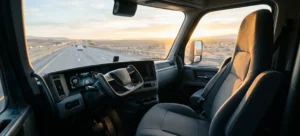
The view from inside a moving autonomous semi-truck at dawn, the driver's seat empty and the steering yoke turning with no one at the wheel.

The Financial Case for Autonomous Trucks, and the Question It Leaves Unanswered

Autonomous technology is moving off the test track and onto public highways. The trucking industry is making an aggressive financial case for it: lower labor costs, round-the-clock utilization, fewer crashes. Much of that math holds up. But the numbers that sell a fleet on going driverless don’t answer the question that matters most after something goes wrong on the road: when an autonomous truck causes a crash, who is responsible? Here is what the financials actually show, and where they go quiet. Key takeaways The Up-Front Cost of the Technology The first cost is acquiring the hardware and converting an 18-wheeler to drive itself. According to Goldman Sachs Research, equipping a truck with autonomous technology in the U.S. currently runs $125,000 to $150,000 per truck. That figure is projected to fall to $35,000 to $40,000 by 2035 as hardware matures and production scales. Goldman projects autonomous trucks will reach cost parity with human-driven ones around 2028. That is the cost for a single vehicle. For

Read More
Self-driving semi-truck on a dark highway surrounded by data streams and sensor rings representing autonomous vehicle technology

Who’s Liable When a Self-Driving Truck Causes a Crash?

Self-driving trucks are already on American highways, but when one crashes into you, who’s responsible? The AV company, the truck manufacturer, or the fleet operator? A board-certified truck accident attorney breaks down how liability works when there’s no driver to blame.

Read More
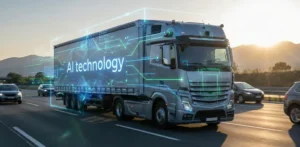
Autonomous semi-truck driving on highway with AI technology overlay

The Rise of Autonomous Trucking: What You Need to Know About Self-Driving Trucks

As our world becomes more centered around technology and artificial intelligence, we are fast approaching the point where our roads will be overrun by driverless vehicles. Like self-driving cars, driverless tractor-trailers and delivery trucks are beginning to appear on many roads and highways across the United States. Autonomous trucking refers to the use of AI technology to operate and drive semi-trucks without—or with limited—human guidance. If the technology proves safe and reliable, it could improve the safety of our roads. However, we are all involuntarily part of the current test phase, and in many states, these vehicles operate without any additional reporting, oversight, or extra insurance to cover when the machines and technology fail, injuring and killing people. The 6 Levels of Autonomous Trucking According to SAE International’s J3016 standard, truck-driving automation can be divided into six levels, ranging from Level 0 (fully human-operated) to Level 5 (fully autonomous). Levels 0-2: Human-Operated Vehicles These levels require a human being to

Read More
Why Are Autonomous Trucks Dangerous?

Why Are Autonomous Trucks Dangerous?

When you imagine the future of self-driving cars and trucks, it’s easy to focus on the positives. However, although developers of autonomous vehicles strive to make them as safe as possible, these vehicles pose serious risks.  The sheer size difference between commercial trucks and cars makes the dangers of autonomous commercial trucks even greater than those of autonomous passenger vehicles. These are some of the primary safety concerns associated with self-driving trucks. There’s Always a Risk of Software Malfunctions Highly sophisticated software systems control autonomous trucks and other self-driving vehicles. However, even the best software can experience glitches. If a glitch happens when a cargo truck is going 80 miles per hour on the interstate, there’s a good chance it will lead to a truck accident. Software systems are also vulnerable to cyberattacks. If a hacker were to gain control of one or more autonomous trucks, the results could be catastrophic. They Can Be Unpredictable Like human drivers, autonomous vehicles

Read More
What Is an Autonomous Truck?

What Is an Autonomous Truck?

Self-driving cars are making the news with increasing regularity. Currently, no car on the market is fully autonomous, but in the near future, we may see truly driverless vehicles. Autonomous cars are an exciting prospect for consumers, but trucking companies are also eyeing self-driving technology. Although it will likely be quite some time before you see a driverless tractor-trailer next to you on the highway, a handful of companies are currently developing and testing autonomous trucking technology. What Are Autonomous Trucks, and How Do They Work? Autonomous trucks, also called self-driving trucks, are commercial trucks that can operate without human intervention. These vehicles rely on a collection of cutting-edge software and hardware: Lidar (Light Detection and Ranging) Without a human behind the wheel, an autonomous truck needs another way to “see” its environment. That’s where lidar comes in. Lidar is a technology that uses pulsing lasers to detect distances.  A lidar system typically has three main components: By creating a

Read More
10 Largest Trucking Companies in the United States

10 Largest Trucking Companies in the United States

Every day, thousands of trucks drive millions of miles delivering goods across the country. The U.S. has countless trucking companies, the largest of which earn billions of dollars every year.  What makes a trucking company the largest? Is it the profit it makes or the size of its fleet? Both are reasonable ways to judge size. The following are the 10 largest trucking companies in the U.S. UPS This massive delivery company has 94,000 delivery vehicles designed primarily for urban areas. These vehicles are smaller than 18-wheelers but larger than the average passenger vehicle or SUV, and UPS truck accidents are rare on highways. FedEx This competitor to UPS is only slightly smaller in fleet size and annual revenue. FedEx reported a revenue of $87.7 billion in 2024 and has a fleet of almost 81,000 vehicles. Unlike UPS, though, over a third of this fleet is dedicated to freight, which means they have more semi trucks. J.B. Hunt J.B. Hunt

Read More
Average Settlement Value Of A Truck Accident Injury Case

Average Settlement Value Of A Truck Accident Injury Case

Under Florida law, all drivers must carry personal injury protection coverage in their auto insurance policies. After a minor crash, their insurer pays for a portion of their medical bills and missed paychecks. However, heavy trucks, like construction vehicles and semi trucks, don’t cause minor crashes — they more often cause severe or fatal injuries. The value of an injury claim depends on many factors unique to your truck accident. In other words, there’s no settlement value that applies to all crashes. Consequently, any “average” given would provide little to no information about the payout you can expect in your case. Instead of providing generic figures, a truck accident attorney will look at the following factors to assess the value of your case. The Severity Of Your Injuries The primary factor in determining your case’s value is your injuries. Injuries that cause greater losses will enable you to recover greater compensation. An injury may be considered “severe” in a few

Read More

Schedule
Your Free
Consultation

Fill out the form below, a truck accident expert will be in touch shortly.