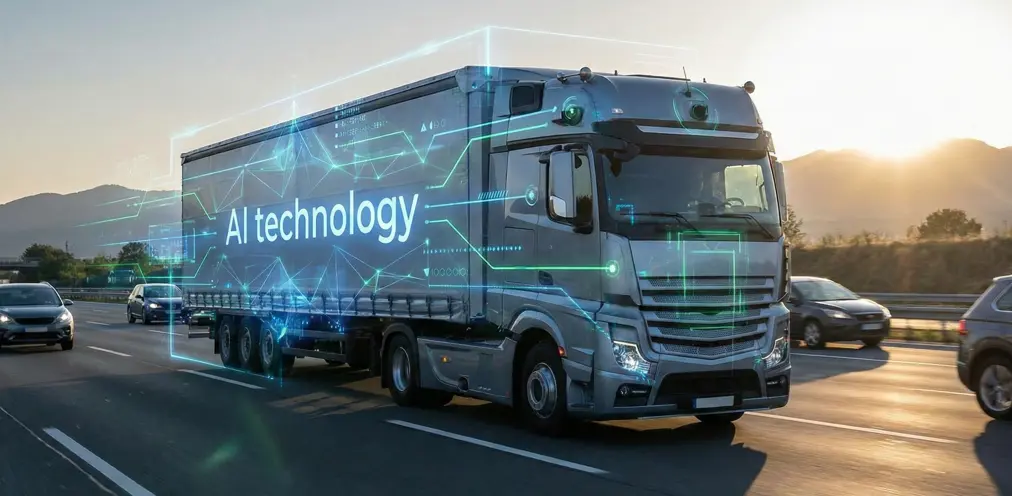
As our world becomes more centered around technology and artificial intelligence, we are fast approaching the point where our roads will be overrun by driverless vehicles. Like self-driving cars, driverless tractor-trailers and delivery trucks are beginning to appear on many roads and highways across the United States.
Autonomous trucking refers to the use of AI technology to operate and drive semi-trucks without—or with limited—human guidance. If the technology proves safe and reliable, it could improve the safety of our roads. However, we are all involuntarily part of the current test phase, and in many states, these vehicles operate without any additional reporting, oversight, or extra insurance to cover when the machines and technology fail, injuring and killing people.
The 6 Levels of Autonomous Trucking
According to SAE International’s J3016 standard, truck-driving automation can be divided into six levels, ranging from Level 0 (fully human-operated) to Level 5 (fully autonomous).
Levels 0-2: Human-Operated Vehicles
These levels require a human being to operate and drive the vehicle, with technological features that aid the driver’s experience. Common examples include:
- Adaptive cruise control
- Blind spot warnings
- Lane deviation warnings
- Automatic emergency braking
Level 3: Conditional Automation
Level 3 is the first level at which a human is not actively driving the vehicle. However, a person must be present and ready to take over if the AI technology requests it. This level is likely the safest since a human remains available when the technology fails.
Levels 4-5: High to Full Automation
Level 4 requires a human to be present, but they do not have to engage when the system is operating within its designed parameters. Level 5 is completely autonomous, with no person present or involved at all.
From our perspective, Level 3 is ideal. The technology works 24/7 to assist human drivers in doing their jobs better and safer. Hundreds of thousands of truck drivers would keep their livelihoods, and our roads would be safer. While added technology benefits human operation of a vehicle, all technology can fail, be hacked, and always has bugs and issues. That’s why having a human present and ready to take control is crucial. Without people present and driving, when the technology fails, it will be catastrophic.
Learn more about what autonomous trucks are and why they can be dangerous.
The Current Rate of Autonomous Truck Adoption
Contrary to predictions made in 2020 that autonomous trucking would grow exponentially, the rollout is taking longer than forecasted. Some of that delay can be attributed to the technology not performing at expected levels.
In terms of actual automation levels, most trucks entering our roadways will be Level 2 due to cost considerations and to avoid the safety risks that begin at Level 3. According to the World Economic Forum, autonomous trucks are predicted to account for up to 30% of new truck sales in the U.S. by 2035.
Even though the growth of autonomous trucking is slower than expected, the risk of technological failures remains high in the trucks already driving on our roads.
The Dangers of Mixed Vehicles on the Roadways
One fundamental problem leading to crashes all over the country is the danger posed by vehicles with advanced technology sharing roads with those that lack such systems.
Since 2020, almost all Class 8 semi-tractor trailers come equipped with forward collision avoidance technology and automatic emergency braking. This means trucks with all the safety technology can stop at highway speeds in two seconds or less under ideal conditions.
For the cars following behind that cannot see past the semi, this can be catastrophic. The time it takes to perceive and react to any surprise situation is typically longer than two seconds, especially at night. If the truck driver is distracted and the advanced technology stops the tractor-trailer from rear-ending traffic ahead in under two seconds, the following vehicle may be deprived of any warning and run into the rear of the abruptly stopped semi.
There are currently no warning signs on the rear of tractors or trailers advising that they have advanced emergency braking technology. The result is that even though our own vehicles have more technology to help warn us, we need to be safer, more alert, and more cautious on the highways.
Safety tip: Increase your following distance and allow more space between you and other vehicles. Hopefully, between improved technology and attentive drivers, we can all arrive alive and safely.
What to Do If You’re Involved in a Crash with an Autonomous Truck
Crashes with autonomous vehicles can feel like a scene from a creepy sci-fi movie. Picture this: a crash between a semi-truck and a car. The car driver comes to, gets out of the car, and walks over to check on the semi driver—only there is no one in the truck. The engine is running, and the driver can hear the truck undergoing self-testing of its components. Then the truck starts backing up and driving away.
This scenario is unfortunately very real, and it happens. In some states, like Florida, there is no requirement that an autonomous truck stop and wait for the police to arrive after a crash.
Steps to Take After an Autonomous Truck Crash
Just like any other crash, if you are able and it is safe to do so:
- Take photos and video of the vehicles and crash scene, preferably before they have moved
- Document identifying information including any company names, logos, or numbers on the tractor or trailer, as well as license plates for both
- Gather witness information by getting names and contact information for anyone who witnessed the crash (note: police will only report witnesses who stay long enough to give a statement)
- Be your own investigator in trying to identify all of the people or companies involved in putting that truck on the road and why the crash happened
- Contact a board-certified trucking lawyer as soon as possible to take over the investigation and seek justice for you and your family
For more guidance, visit our help for truck accident victims page or review our truck crash FAQs.
Why You Need a Board-Certified Trucking Lawyer
If you or a loved one has suffered injury or death in a significant crash with a commercial vehicle, you must understand there is a huge difference between a general personal injury lawyer who advertises that they handle trucking cases and an attorney who has been vetted by trucking experience and knowledge as an expert in handling trucking crash cases.
When speaking with renowned and board-certified lawyer Joe Camerlengo, to become board-certified in trucking law through the National Board of Trial Advocacy, an attorney must have handled many trucking cases before they are even considered. Once an attorney has enough experience handling trucking crash cases to qualify, they must then:
- Be peer reviewed
- Submit writing samples and references
- Pass a comprehensive knowledge-based test on trucking and trial law
You can locate a board-certified truck accident law attorney at the NBTA’s attorney search page. As of this writing, fewer than 100 attorneys nationwide have met the standards to become board-certified in truck accident law.
The Difference a Board-Certified Attorney Makes
Most general personal injury lawyers, even those who have handled many trucking crash cases, do not know how to discover all the entities involved in putting a dangerous trucking company or truck driver on the road. They often recommend settling quickly for the trucking company’s minimal insurance limits, rather than fighting for full justice for you and your family.
Board-certified trucking attorneys fight to identify all parties involved in putting that dangerous truck on the road and obtain their asset and insurance information. This approach often leads to resolutions in the tens of millions of dollars, rather than a quick settlement for the trucking company’s $750,000 or $1,000,000 in insurance coverage.
We have taken over many cases after clients terminated volume-advertising personal injury attorneys who recommended they settle for the truck driver’s minimal insurance limits. We were able to obtain significant recoveries, including:
- $11.6 million
- $26.5 million
- $56.6 million
View more of our case results.
Choose a Specialist for Serious Cases
In medicine, you would never go to your general practitioner for a complicated medical procedure that required specialized knowledge and expertise. Most lawyers who advertise for car crashes, slip and falls, medical malpractice, workers’ compensation, dog bites, and trucking cases are the equivalent of general practitioners. They are suitable for less significant cases, but you want a board-certified specialist for your serious or catastrophic cases.
This applies to more than just trucking crash cases—there are many areas of legal specialization. Make sure your lawyer is board-certified to increase your chances of getting a just recovery.
Contact a Board-Certified Truck Accident Attorney Today
If you or a loved one has been injured in a crash involving an autonomous truck or any commercial vehicle, don’t settle for less than you deserve. Schedule your free case review with The Truck Accident Law Firm today, or call us at 888-511-TRUCK.